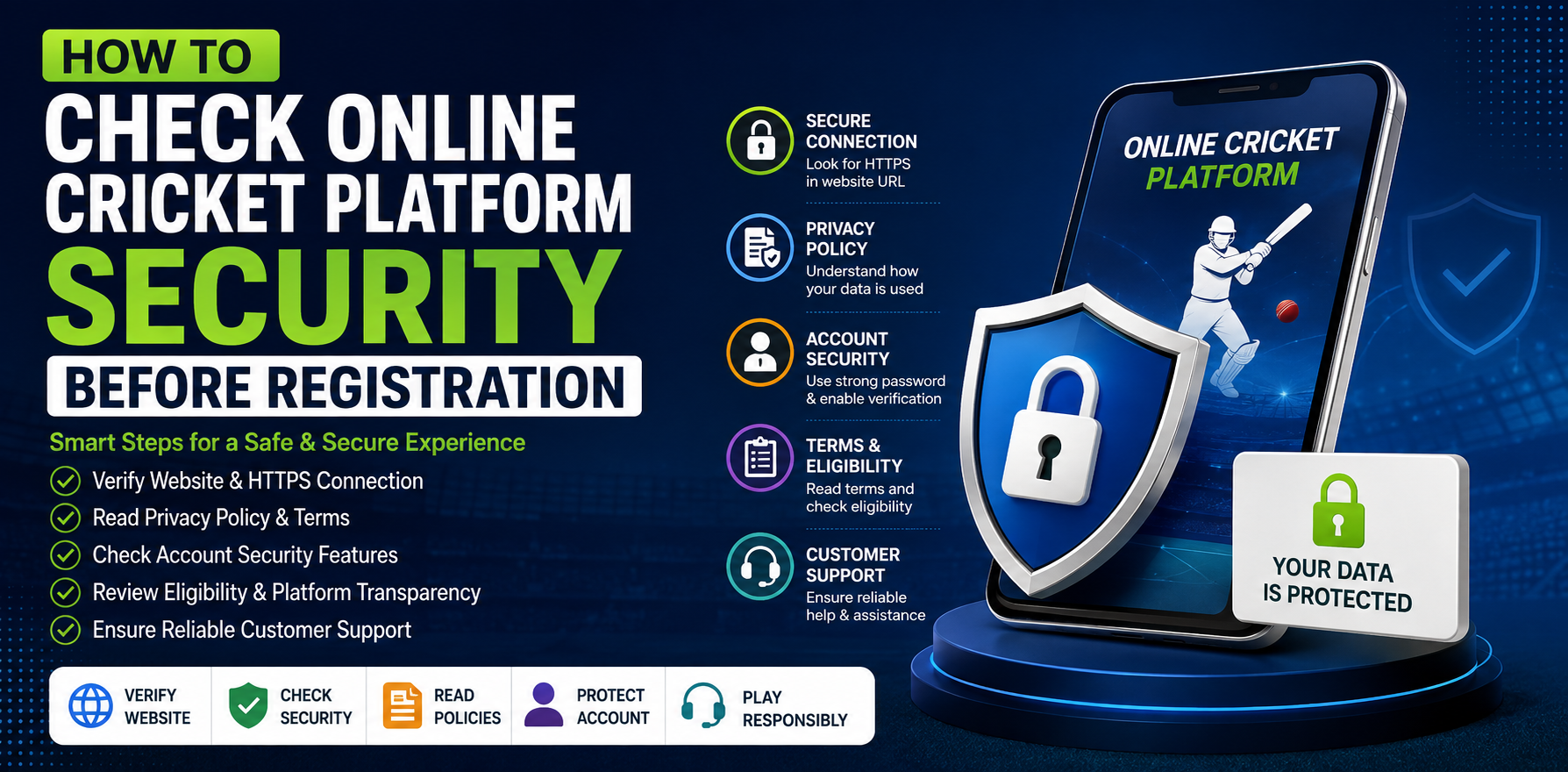
How to Check Online Cricket Platform Security Before Registration
Choosing an online cricket platform should begin with security, privacy, and transparency rather than attractive offers or promotional claims. Before creating an account, users should understand how the website handles personal information, what security measures are available, and whether its terms are clear.
If you are researching Cricket ID online options, you can also read our detailed guide on Cricket ID Online: How to Choose the Right Platform in 2026.
A modern online cricket platform may be accessed through smartphones, tablets, or desktop computers. Convenience is useful, but an easy-to-use website does not automatically mean that it is trustworthy. Taking a few minutes to evaluate a platform can help users make more informed decisions.
This guide explains the key areas to check before registration, including website security, privacy policies, account protection, eligibility requirements, customer support, and platform transparency.
What Is an Online Cricket Platform?
An online cricket platform is a website or digital service that provides cricket-related information, account features, or other online services.
The features available can differ from one platform to another. Some websites may focus primarily on cricket information, while others may provide account-based services.
Before registering, users should first understand exactly what the website provides.
Look for clear information about:
- Available services
- Registration requirements
- Account features
- Privacy practices
- Terms and conditions
- Customer support
- Eligibility requirements
Understanding these basics is the first step toward safer online activity.
Why Platform Security Matters
When creating an account, users may provide information such as a name, mobile number, email address, or other account details. This makes security an important consideration.
A secure-looking website should not be judged only by its design. Users should look for clear information about how accounts and personal information are protected.
Security considerations include:
- Secure website connections
- Strong password practices
- Account verification
- Privacy controls
- Clear security information
- Safe customer-support channels
Users should also remember that personal account security is a shared responsibility. Even a well-designed platform cannot protect an account if a password is repeatedly shared with other people.
1. Check the Website Address Before Registering
The first step is surprisingly simple: check the website address carefully.
Before entering personal information, make sure you are visiting the intended website rather than a suspicious copy or unfamiliar domain.
Pay attention to:
- Spelling of the domain name
- Unexpected redirects
- Suspicious pop-ups
- Unusual login pages
- Links received from unknown sources
Avoid entering account information after clicking an unexpected link from an unknown message or social media account.
Instead, type the website address yourself or use a trusted bookmark.
2. Look for a Secure Connection
A website using HTTPS provides an encrypted connection between the browser and the website.
You can check the address bar in your browser to see whether the website uses HTTPS.
However, HTTPS should not be treated as proof that a website itself is trustworthy. It protects the connection, but users should still evaluate the provider, policies, and services separately.
Think of HTTPS as one security signal rather than a complete trust certificate.
3. Read the Privacy Policy
A privacy policy is one of the most useful resources to review before creating an online cricket ID.
It should help users understand what information may be collected and how that information is handled.
Look for answers to questions such as
- What personal information is collected?
- Why is the information required?
- How is information stored?
- Is information shared with third parties?
- How can users contact the website about privacy concerns?
- How can users request information about their data?
If a website requests sensitive information without clearly explaining why it is necessary, users should stop and investigate further.
For more information, users can review the site's Privacy Policy before registering.
4. Review the Terms and Conditions
Security is not only about passwords and technology. Users should also understand the rules governing account usage.
Read the terms and conditions before registration, particularly sections covering:
- Minimum age
- Geographic eligibility
- Account restrictions
- Verification requirements
- Account suspension or closure
- Service limitations
- Applicable laws
These requirements can vary depending on the service and location.
Users should never attempt to bypass age, identity, geographic, or other eligibility restrictions.
The site's Terms & Conditions can also be reviewed for additional information about applicable account and service rules.
5. Evaluate Account Protection
A reliable online cricket platform should encourage users to protect their account credentials.
Users should create a password that is:
- Long enough to be difficult to guess
- Unique to the account
- Not based on easily available personal information
- Not shared with other people
Avoid using the same password for multiple websites.
If the platform provides additional account-security options, users should understand how those features work and use them when appropriate.
Never give your password or verification information to an unknown person claiming to provide account support.
6. Check Customer Support
Customer support is another useful factor when evaluating an online cricket platform.
Before registering, check whether the website clearly explains how users can request assistance.
Look for:
- Contact information
- Support pages
- Frequently asked questions
- Account-help information
- Clearly identified communication channels
A professional support system should make it reasonably clear where users should go when they have an account or technical question.
Be cautious of individuals on social media who claim to represent a website but cannot be verified through the official platform.
7. Look for Platform Transparency
Transparency helps users understand what they are signing up for.
A platform should provide straightforward information rather than forcing users to rely entirely on promotional statements.
Check whether the website clearly explains:
- Who operates the service
- What the platform provides
- Account requirements
- Privacy practices
- Applicable restrictions
- Contact methods
- Terms and conditions
A lack of basic information should encourage users to research further before registering.
8. Check Mobile Security
Many users access an online cricket ID through smartphones. Mobile convenience is useful, but it also creates additional security considerations.
When using a mobile device:
- Keep the operating system updated
- Use an updated browser
- Avoid logging in through unknown public devices
- Do not save passwords on shared computers
- Avoid suspicious applications or browser extensions
- Use a screen lock on your phone
If you use a public or shared device, always log out after completing your session.
9. Be Careful With Links and Messages
Phishing is a common online security problem. A message may appear to come from a website while actually directing users to an unrelated page.
Be cautious when a message:
- Creates unnecessary urgency
- Requests your password
- Requests sensitive information
- Contains an unfamiliar link
- Promises an unusual benefit
- Claims that your account will immediately be closed unless you respond
When in doubt, visit the official website directly instead of clicking the message link.
10. Don't Choose a Platform Based Only on Offers
Offers can attract attention, but they should not be the main factor when evaluating an online cricket platform.
A better approach is to consider:
Security → Privacy → Transparency → Eligibility → Support → Usability
Only after understanding these areas should users consider other platform features.
This approach reduces the chance of making a decision based solely on advertising.
How to Compare Two Online Cricket Platforms
If you are comparing multiple websites, create a simple checklist.
| Factor | Platform A | Platform B |
|---|---|---|
| HTTPS connection | ✓ / ✗ | ✓ / ✗ |
| Privacy policy | ✓ / ✗ | ✓ / ✗ |
| Clear terms | ✓ / ✗ | ✓ / ✗ |
| Contact information | ✓ / ✗ | ✓ / ✗ |
| Eligibility information | ✓ / ✗ | ✓ / ✗ |
| Account security information | ✓ / ✗ | ✓ / ✗ |
| Mobile usability | ✓ / ✗ | ✓ / ✗ |
This makes the comparison more objective and prevents one attractive feature from influencing the entire decision.
For a broader explanation of what to consider when evaluating an online cricket service, readers can visit the Cricket ID Online platform guide.
What to Do If Something Looks Suspicious
Do not rush if a website or message feels unusual.
Instead:
- Stop entering information.
- Close suspicious pop-ups or pages.
- Check the website address again.
- Visit the official website directly.
- Review the privacy and terms pages.
- Contact official support if necessary.
- Change credentials if you believe an account may have been compromised.
Taking a few extra minutes can be much safer than trying to resolve a problem later.
Frequently Asked Questions
1. What should I check before using an online cricket platform?
Check the website address, HTTPS connection, privacy policy, terms, eligibility requirements, security information, customer support, and overall transparency.
2. Is HTTPS enough to prove a website is trustworthy?
No. HTTPS protects the connection, but users should also evaluate the provider, policies, services, and account-security practices.
3. Why should I read the privacy policy?
It explains what information may be collected, why it is collected, and how it may be handled or shared.
4. How can I protect my online cricket ID?
Use a strong and unique password, avoid sharing credentials, keep your device updated, and be cautious with unfamiliar links.
5. Should I use the same password on different platforms?
No. Using unique passwords reduces the potential impact if one account becomes compromised.
6. What makes an online cricket platform transparent?
Clear provider information, accessible policies, understandable terms, eligibility details, contact information, and straightforward service descriptions are useful signs of transparency.
7. Should I trust links sent through social media?
Not automatically. Verify the source and visit the official website directly when possible.
8. Why are eligibility requirements important?
Eligibility requirements can depend on age, location, laws, and the specific service. Users should follow the applicable requirements rather than attempting to bypass them.
9. What should I do if a website asks for unusual information?
Do not provide it immediately. First check the privacy policy and understand why the information is required. If the reason remains unclear, consider contacting official support.
10. Where can I find more information about choosing a cricket ID platform?
You can read the site's Cricket ID Online platform guide for additional factors to consider before choosing an online service.
Conclusion
Checking security before registering with an online cricket platform is an important part of responsible digital use. A professional-looking website alone is not enough. Users should examine its privacy policy, terms and conditions, eligibility requirements, account-security practices, customer support, and overall transparency.
An online cricket ID should be treated like any other online account: protect login credentials, use secure devices, avoid suspicious links, and carefully consider what personal information you provide.
Most importantly, take time to research before registering. Comparing platforms objectively and understanding their policies can help you make a more informed decision while keeping account security and privacy at the center of the process.