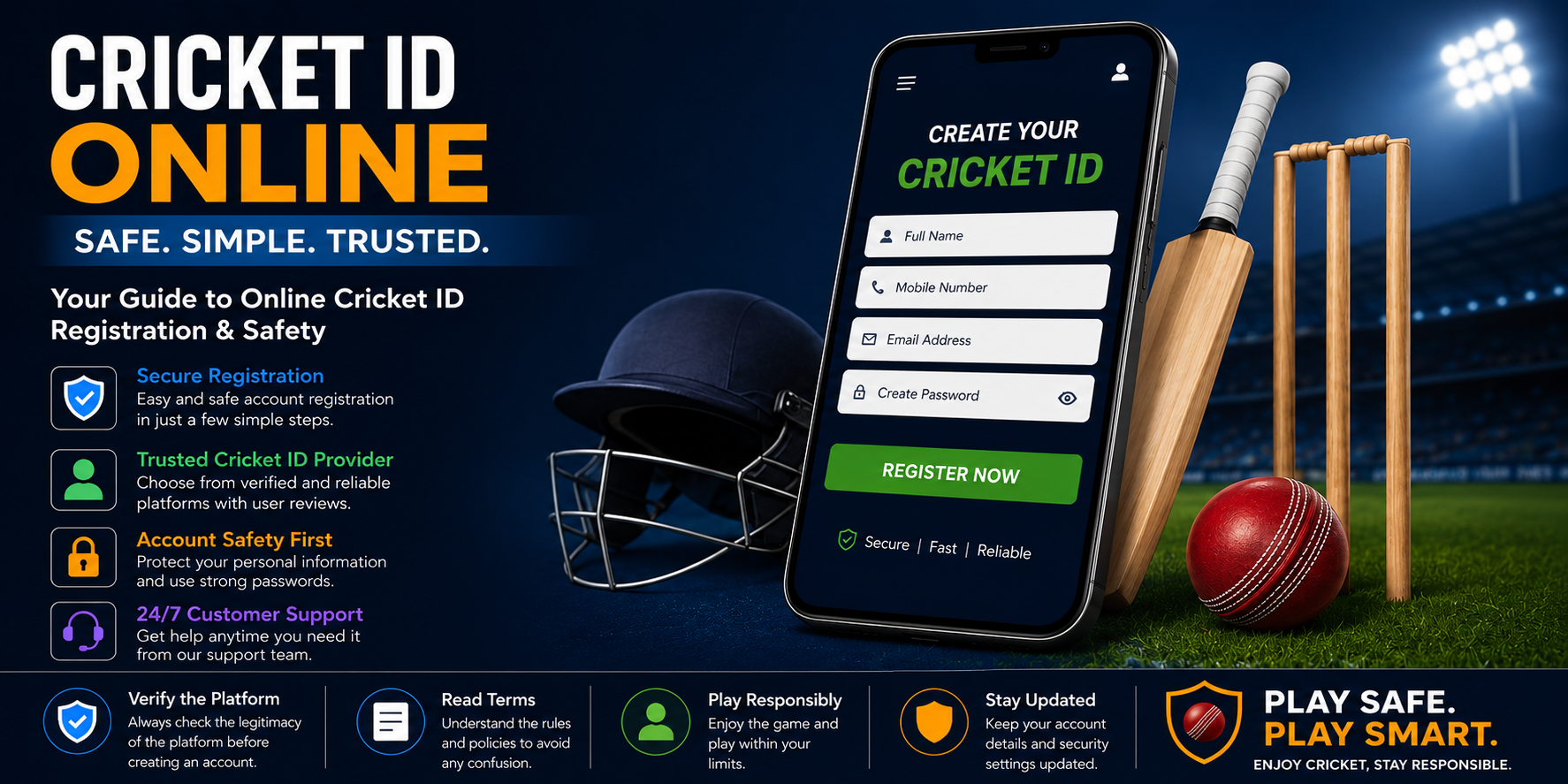
Cricket ID Online Registration: Account Setup & Safety Guide
The growing use of digital sports platforms has made terms such as cricket ID online and online cricket ID increasingly common among internet users. However, finding a suitable platform is not simply about clicking the first website that appears in search results. Users should understand how digital accounts work, what information may be required, how verification is handled, and what security measures should be considered before registration.
A cricket-related digital account may provide access to different services depending on the platform. Some websites focus on provider discovery, reviews, ratings, and account-related information, while others may connect users with third-party services.
This guide explains the basics in a simple way. It also covers what users should look for when comparing a trusted cricket ID provider, what the phrase “How to create a betting ID” generally means, and how to protect personal information while using online services.
What Is a Cricket ID Online?
A cricket ID online generally refers to a digital account associated with a cricket-related online service.
The exact purpose of an account can vary between providers. Depending on the service, users may have access to account management, provider information, customer support, reviews, or other platform features.
Before registering for an online cricket ID, it is important to understand exactly what the website provides.
Consider checking:
- The purpose of the account
- Registration requirements
- Verification requirements
- Privacy information
- Terms and conditions
- Available customer support
- Account security practices
Understanding these details before registration can help prevent confusion later.
How to Create a Betting ID: What Users Should Understand
The phrase How to create a betting ID is commonly used when people search for information about accounts connected with betting services.
The general registration process can vary significantly depending on the provider and applicable laws. A responsible approach is to first confirm that the service is legally available to you and that you meet its eligibility requirements.
A typical account-registration process may involve:
- Visiting the provider's official website or authorized registration channel.
- Reviewing the available terms and eligibility requirements.
- Providing the information requested during registration.
- Completing any identity or account verification required by the service.
- Setting secure login credentials.
- Reviewing the account and privacy settings.
The exact process should always be determined by the provider's current instructions.
Users should never provide passwords, OTPs, banking credentials, or other sensitive information to an unknown person claiming to create an account on their behalf.
Choosing a Trusted Cricket ID Provider
Before registration, users should check whether the provider clearly explains its services, registration requirements, privacy policy, terms, and support options.
Account Security Should Come First
When using a cricket ID online, account security should always be treated seriously.
A few basic habits can reduce common account security problems.
Use a Unique Password
Don't reuse the same password across multiple websites.
Protect OTPs and Login Details
Never share passwords, OTPs, recovery codes, or other authentication information with strangers.
Check the Website Address
Before entering personal information, make sure you are using the intended website.
Be Careful With Messages
If someone sends you a registration or login link through an unexpected message, verify it before opening or entering information.
Keep Your Device Updated
Updated browsers and operating systems generally provide better protection against known security issues.
What Information May Be Required?
Registration requirements depend on the provider.
An online cricket ID service may request information such as:
- Name
- Mobile number
- Email address
- Date of birth
- Account credentials
- Verification information
Before submitting anything, users should understand why the information is being requested and how it will be used.
A privacy policy can help explain what data a website collects and how that data is handled.
Why Privacy Policies Matter
Many users skip privacy policies because they appear complicated, but they can contain important information about personal data.
Before creating an account, check whether the website explains:
- What information it collects
- Why information is collected
- Whether information is shared
- How information is stored
- How cookies are used
- How users can contact the company about privacy
You can naturally direct readers to the site's Privacy Policy when discussing personal data protection.
Understanding Terms and Conditions
Terms and conditions explain the rules associated with a service.
Before using a cricket-related platform, users should look for information about:
- Eligibility
- Account responsibilities
- Restrictions
- Third-party services
- User responsibilities
- Dispute procedures
- Changes to services
A clear understanding of these rules can help users avoid unexpected problems.
For TrustMyBookie-related information, the site's Terms & Conditions can be referenced as part of the internal navigation structure.
Common Mistakes to Avoid
Using an Unverified Link
Always check the website before entering personal information.
Sharing Your Password
A legitimate support representative should not need your private password.
Ignoring Terms
Important account rules may be explained in the terms and conditions.
Trusting Every Online Review
Some reviews may not provide enough context. Compare multiple sources.
Using Weak Passwords
Avoid predictable passwords that can easily be guessed.
Making a Quick Decision
Take time to understand the provider and service before registering.
A Simple Checklist Before Registration
Before creating or using a Cricket ID online, ask yourself:
- Is the website clearly identified?
- Do I understand what the account provides?
- Are the terms available?
- Is there a privacy policy?
- Is the provider information clear?
- Can I find genuine reviews?
- Is customer support available?
- Have I checked eligibility requirements?
- Am I protecting my login information?
- Do I understand the risks and restrictions?
If the answer to several of these questions is no, take more time to research before proceeding.
Frequently Asked Questions
1. What is a cricket ID online?
A cricket ID online generally refers to a digital account connected with a cricket-related online service. The exact features depend on the provider.
2. How to create a betting ID?
The registration process varies by provider and location. Users should check eligibility, applicable laws, official registration instructions, and the provider's terms before creating an account.
3. What information may be needed for registration?
Requirements vary, but a service may request basic contact information and verification details. Always check why information is being requested.
4. How can I protect my cricket ID online?
Use a strong unique password, keep OTPs private, avoid suspicious links, and verify the website before entering sensitive information.
5. Why should I read the privacy policy?
The privacy policy can explain what information a website collects, why it is collected, and how it may be used or shared.
6. Can I use a cricket ID on a mobile device?
This depends on the individual platform. Check whether the website supports mobile browsers or provides a compatible service.
Choosing the right platform requires careful research, clear information, and attention to account safety. For more information, read our cricket ID online guide to understand the important factors before choosing a platform.
Final Thoughts
Researching a cricket ID online should begin with understanding the service rather than immediately creating an account.
Looking for information about how to create a betting ID, always consider eligibility, privacy, security, terms, provider information, and applicable restrictions.
Keep your login details private, verify websites before sharing information, and avoid making decisions based only on promotional claims.
A well-informed approach helps users understand online account services more clearly and make decisions based on reliable information rather than assumptions.